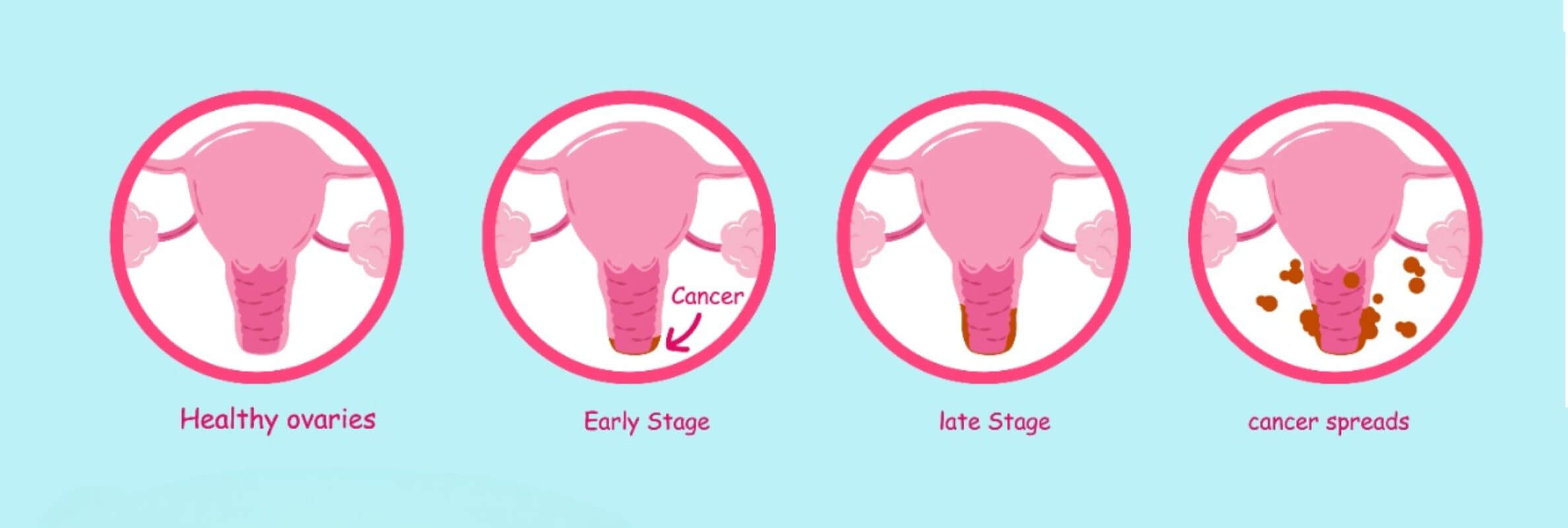
Cervical cancer is ranked as the fourth most common cancer among women. Nearly 660,000 new patients were diagnosed in 2022, with 350,000 deaths reported [1-2]. Most of those lethal cases, about 94%, are observed in low- and middle-income countries because of limited access to human papillomavirus (HPV) vaccination and regular screenings. Even in developed countries, like the USA, 13,360 new cases of invasive cervical cancer and 4,320 deaths are expected annually [3]. This shows that stage four cervical cancer patients are at high mortality risk with a five-year survival rate of only 15-17%, compared to 95% in stage 1 and 70% in stage 2 [4].
When the tumor becomes metastatic, it is no longer growing within the cervix or close surrounding organs in the pelvic area, but spreads to distant organs. The most common sites are the lungs, liver, lymph nodes, and bones. This creates a significant challenge in disease management, but there is hope with all the new approaches that can help achieve tumor control even in patients with stage 4 of cervical cancer.
Experienced multidisciplinary teams are evaluating each case and creating a personalized treatment plan that helps patients achieve the most favorable outcomes possible. Even when a tumor is advanced, there is a chance for control of growth and spread.
Standard Treatment Methods for Stage 4 Cervical Cancer
When cancer is advanced, the treatment focus shifts from achieving a complete cure to lowering the symptoms burden and keeping the patient's quality of life as long as possible. Conventional procedures are designed to limit the tumor growth and reduce metastatic spread [5].
Chemotherapy is the most common systemic therapy used in stage 4 cervical cancer treatment. It targets fast-dividing cells, resulting in decreased tumor growth and slowed progression. But such temporary disease control can be accompanied by severe side effects, which can significantly disrupt patients' quality of life.
Radiation therapy is also a widely used therapy that helps to relieve local symptoms like severe bleeding or pain. During radiotherapy, high-energy beams are placed on the cancerous tissue with precise dose planning, and the radiation shrinks the tumor and alleviates discomfort. It cannot significantly extend survival, but it plays a valuable role in symptom management.
Palliative care is an important component of the management of stage 4 cervical cancer. It focuses not only on reducing physical symptoms like pain or bleeding, but also on psychological support to both patients and their families. When delivered through a multidisciplinary cancer team, palliative care enhances patient comfort and helps maintain dignity throughout the course of the disease.
A stage 4 cervical cancer diagnosis represents the stage where the tumor has migrated far past the cervix and nearby organs, and has started growing in the lungs, liver, bones, etc. Standard protocols may control some symptoms initially, but over time, cancer often develops resistance, and patients experience more severe side effects than benefits.
Booking Health helps patients navigate the complex field of treatment planning. Our medical consultants are physicians who review every case and provide you with a comprehensive and appropriate treatment strategy based on your specific tumor type and the extent of spread.
Innovative Treatment Methods for Stage 4 Cervical Cancer
Recent studies indicate a worrying trend. The number of cases of stage 4 cervical cancer has been increasing. This highlights the critical need for early detection and availability of innovative treatment options. For example, the treatment of cervical cancer stage 4 now includes options such as dendritic cell therapy, transarterial chemoembolization (TACE), and hyperthermia therapy. Today, the best treatment for stage 4 cervical cancer could have better long-term outcomes and quality of life.
Interventional Radiology for Stage 4 Cervical Cancer
Interventional radiology provides several minimally invasive procedures that have become important tools in the treatment of advanced cervical cancer. These image-guided techniques provide targeted treatment options for patients with recurrent disease, patients who are not surgical candidates, or women who have exhausted conventional treatment options. These procedures may provide local control of disease and palliation of symptoms by providing targeted therapy to tumor sites with sparing of adjacent healthy tissues.
Thermal ablation is a new technique that includes radiofrequency ablation (RFA) and microwave ablation (MWA). They showed promising outcomes in gynecologic oncology, particularly in treating locally recurrent cervical cancer. These techniques generate heat sufficient to cause irreversible cellular damage.
Clinical studies have shown that MWA, when used in combination with radiotherapy or systemic chemotherapy, can achieve local control rates of up to 82% at one year of observation. It is of great importance for patients with limited pelvic disease recurrence. Thermal ablation may serve as an effective alternative for patients who are ineligible for repeated radiation sessions.
Cryoablation, which uses extremely low temperatures to induce tumor cell lysis and microvascular shutdown, provides another tissue-sparing option. In cervical cancer, it has mainly been investigated for recurrent pelvic lesions, especially in palliative settings or when tumors are located near critical structures such as the bladder or rectum.
Cryotherapy has been associated with symptom relief and reduction of tumor volume in >75% of the reported cases treated with minimal adverse effects [2]. It is well tolerated and can be repeated in case of recurrence or residual disease.
Electrochemotherapy (ECT) is also a novel intervention in the management of advanced or recurrent cervical malignancies, especially when lesions involve the vaginal vault, pelvic sidewall, or skin. This technique consists of the administration of a cytotoxic drug followed by pulsed electrical stimulation, which increases intracellular uptake of the drug.
VIDEO
Prof. Kovács: How Electrochemotherapy Became the Gold Standard for Hard-to-Reach Tumors
In recent studies, response rates of 65% to 72% have been observed in patients with recurrent cervical cancer, especially in superficial or accessible tumor sites [3]. ECT also provokes immunogenic cell death, suggesting possible synergy when used in conjunction with immunotherapy agents.
Transarterial chemoembolization (TACE) is a novel therapy that is increasingly used in the case of stage IV cervical cancer, particularly in the presence of metastases in the liver or lungs. The method involves injecting chemotherapy into the blood vessels that feed the tumor, then deliberately blocking these vessels to cut off the blood supply to the tumor, starving it of oxygen and nutrients.
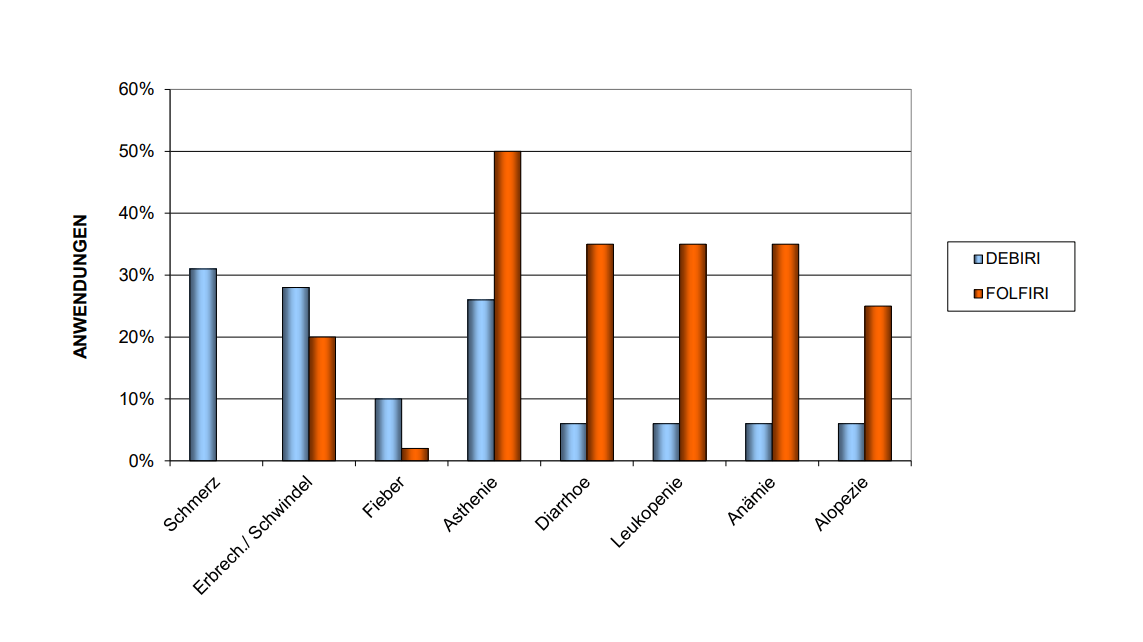
TACE directs the treatment to the tumor site, enhancing effectiveness and significantly reducing systemic side effects. Research has demonstrated tumor shrinkage rates of up to 50-70% with better results than traditional chemotherapy alone [6].
Fiorentini G et al Anticancer Res 2012;32:1387 **DEBIRI = TACE, FOLFIRI = IV therapy; with DEBIRI, 90% of the patients have improved quality of life for 32 weeks
For a detailed explanation of how this method works and its impact on patient outcomes, we recommend watching the interview with Professor Attila Kovács, who shares his clinical experience.
VIDEO
Prof. Kovács: When to Use DEB-TACE, Conventional TACE, or Radioembolization (TARE)
Electrochemotherapy Treatment Option for Cervical Cancer Stage 4
Electrochemotherapy for cervical cancer stage 4 becomes crucial when tumors don't respond to standard therapy. Electrochemotherapy (ECT) treatment for advanced cervical cancer works by making cancer cells porous through electrical pulses — then flooding them with chemotherapy at exact moment they're most vulnerable. For electrochemotherapy treatment for recurrent cervical cancer after radiation, this may be only viable option.
Stage 4 doesn't mean untreatable — it means conventional approaches insufficient. Electro-chemotherapy can control pelvic disease that has resisted other treatments. Professor Karl R. Aigner reports patients with recurrent cervical cancer achieving remission through isolated pelvic perfusion combined with ECT, even after multiple failed conventional treatments.
Technique: electrodes create electrical fields around tumor, pulses delivered under anesthesia, cancer cells become permeable. High-dose chemotherapy penetrates deeply during this vulnerable window — destruction is more complete than systemic therapy could achieve. Side effects minimal because treatment localized, filtration removes excess drugs, patients walk around clinic by afternoon.
The cost of electrochemotherapy reflect complexity and expertise — Booking Health provides information on electrochemotherapy cost.
Regional Chemotherapy for Stage 4 Cervical Cancer
The method offers hope when conventional options fail. Stage IV disease means distant metastases (lungs, liver, bones) — systemic chemotherapy dilutes drugs too much to effectively control both primary tumor and metastases. Professor Karl R. Aigner's approach: treat each site regionally with maximum drug concentrations rather than exposing entire body to inadequate doses.
Method requires isolating pelvic blood flow. High-dose chemotherapy floods tumor, blood flow blocked to trap drugs at site, then special filtration removes remaining drugs before they circulate systemically — patients experience minimal side effects because exposure is limited and controlled. That is the difference between regional and systemic approaches.
Stage 4 patients often have both pelvic disease and distant metastases. Sequential regional treatment controls disease throughout body without overwhelming patient with systemic toxicity. Isolated perfusion for pelvic tumor, hepatic perfusion for liver metastases, pulmonary perfusion for lung involvement — each area treated individually with appropriate drug concentrations.
Results demonstrate what's possible: patients who faced permanent colostomy or were told "nothing more can be done" achieve tumor control, sometimes complete remission.
Dendritic Cell Therapy for Stage 4 Cervical Cancer
Dendritic cell therapy is an advanced immunotherapy that is showing promise in the treatment of advanced cancers, including 4 stage of cervical cancer. This approach takes advantage of the patient’s immune system by using dendritic cells, a type of immune cell that identifies and presents the cancer cells to the body’s defenses. In the lab, these cells are activated and reintroduced into the body, where they assist in stimulating a targeted immune response that allows the immune system to better recognize and attack cancer.
The technique was globally recognized when Dr. Ralph Steinman was awarded the Nobel Prize in Physiology or Medicine in 2011 for the discovery of dendritic cells and their role in adaptive immunity [7], and has shown promising results in research.
If you want to learn more about how this therapy works and its potential to improve patient outcomes, we recommend watching the interview with Professor Frank Gansauge, an experienced immunologist who shares insights and success stories from his clinical practice.
VIDEO
Prof. Frank Gansauge: How Dendritic Cell Therapy is Transforming Modern Cancer Treatment
Hyperthermia therapy is an exciting adjunctive treatment for stage 4 cervical cancer. It utilizes controlled heat to damage cancer cells and improve the efficacy of traditional treatments such as chemotherapy, radiation therapy, and immunotherapy. By raising the temperature of tumors to between 40°C and 45°C, this method disrupts cancer cell structures, improves blood flow to the tumor area, enhancing drug delivery, and stimulates the immune system to better recognize and attack malignant cells.
There are two main types: localized hyperthermia, which targets specific tumor sites using energy sources such as radiofrequency or ultrasound, and whole-body hyperthermia, which raises the entire body temperature to support immune function. Studies have shown that when combined with standard treatments, hyperthermia can improve tumor response and slow disease progression. While still under clinical evaluation, it is increasingly recognized as a valuable option for improving outcomes and quality of life in patients with 4 stages of cervical cancer.
The advanced stage requires multimodal evaluation. To receive a tumor response of up to 90%, doctors often combine advanced procedures with standard options, such as checkpoint inhibitors paired with dendritic cell vaccination. But being evaluated by the tumor board in a leading clinic can be challenging for the patient.
Here is where Booking Health comes into play. With over 20 years of experience, we pair patience with centers that offer procedures to improve patients’ quality of life and help keep cancer under control. Also, our team provides help with visas, travel arrangements, and full-time support during and after getting treatment at the world’s top clinics.
Best Cervical Cancer Stage 4 Treatment Centers
Treatment of cervical cancer at stage 4 requires not just an oncology department, but a highly specialized infrastructure. Such clinics must combine experience in systemic therapy, interventional radiology, immunotherapy, palliative medicine and work with complicated cases. That is why cervical cancer stage 4 clinics are usually represented by large university centers, where decisions are made by multidisciplinary oncology councils.
Modern cervical cancer stage 4 hospitals work not only with tumor control, but also with the patient's quality of life: pain reduction, bleeding control, treatment of metastases and psycho-emotional support. Access to innovative methods plays an important role – regional chemotherapy, electrochemotherapy, hyperthermia, targeted and immunotherapy.
The most effective cervical cancer stage 4 treatment centers in Germany have experience in treating patients with multiple metastases, relapses after radiotherapy and chemoresistant forms of the disease. Particular attention is paid to individual selection of therapy and transparent treatment planning.
For many patients, the cost of cervical cancer treatment at fourth stage is an important factor, because therapy often consists of several stages and different methods. The total cost of treating the fourth stage of cervical cancer depends on the chosen clinic, the volume of interventions, the duration of hospitalization and the need for innovative procedures. That is why patients are recommended to contact international medical coordinator Booking Health who helps to understand the treatment of cervical cancer stage 4 price in advance and avoid hidden fees.
Top Clinics for Stage 4 Cervical Cancer Treatment
Clinic
City
Key Strengths
University Hospital of Ludwig Maximilian
Munich
Advanced oncology care, immunotherapy
University Hospital Rechts der Isar
Munich
Multimodal treatment, modern radiation oncology, complex case management
University Hospital of Ludwig Maximilian University of Munich (LMU Munich)
The University Hospital of LMU Munich is one of the most prestigious oncology centers in Europe – hospital specializes in the treatment of stage 4 cervical cancer. Here doctors actively use modern systemic therapy regimens, immunotherapy and an interdisciplinary approach to palliative care. The clinic is known for its high standards of personalized treatment and access to innovative protocols (not available in most conventional cancer centers).
University Hospital Rechts der Isar Munich
Rechts der Isar is a leading university hospital of the Technical University of Munich which has a powerful department of gynecological oncology. The center widely uses modern interventional approaches to control the local and metastatic process. Particular attention is paid here to patients with relapses after standard treatment and complex clinical cases. The clinic is known for its high level of scientific activity and the implementation of new therapeutic strategies.
University Hospital RWTH Aachen
The University Hospital RWTH Aachen combines oncology, interventional radiology and modern technologies for advanced cancer treatment. The center has extensive experience in working with patients with metastatic cervical cancer – using regional chemotherapy, innovative methods of local tumor control and extended palliative care. The clinic is known for its individual approach to complex cases and close cooperation between different specialists.
Stage 4 Cervical Cancer Treatment Option Comparison Chart
The table below offers a comparison of standard and innovative stage 4 cervical cancer treatment options, highlighting their effectiveness, treatment duration, advantages, limitations, and approximate costs.
Standard vs. Innovative Approaches
Characteristics/Therapy type
2-Year Survival Rate
Response Rate
Duration
Side Effects
Standard Treatment
~25% for advanced cancer
Less than 10%
Several cycles
Severe (nausea, fatigue, hair loss, immunosuppression, skin irritation)
Innovative Methods
~60% for advanced cancer
45-65%
Up to 4 sessions
Mild (localized discomfort)
Treatment Costs for Stage 4 Cervical Cancer
*The cost of each treatment may vary depending on the healthcare provider, country of treatment, treatment duration, and whether the procedure is part of a combined therapy plan. Prices are approximate and may not include additional expenses such as diagnostics, hospital stay, or supportive care.
Treatment Method
GERMANY*
GB
USA
Standard Treatment
€80,000 - €150,000 full course
€90,000 - €165,000 full course
€100,000 - €180,000 full course
Innovative Methods
€25,000 - €60,000 full course
€70,000 - €120,000 full course
€100,000 - €150,000 full course
Booking Health breaks down barriers to access advanced cancer care abroad. We are ISO 9001-certified and maintain stringent quality control at every stage of your treatment process. We also have insurance for our clients, which gives the same rates as for German patients, which are up to 40% lower than the usual prices for people from abroad.
This insurance covers the plans of eligible companies for up to 48 months and offers protection of up to €200,000. Booking Health’s patients will not have any risk charges in case of complications.
Patient Success Stories: Overcoming Stage 4 Cervical Cancer
Being diagnosed with stage 4 cervical cancer, especially if metastatic disease that has spread to the liver, lungs, or bones, can be overwhelming. If left untreated, life expectancy is greatly reduced, and symptoms such as severe bleeding, pain, and fatigue often dominate daily life. But modern oncology and specialized cancer centers are offering innovative solutions, turning despair into hope.
Each patient’s journey is unique, but what these stories have in common is the chance to regain control, to find comfort, and even dramatically extend survival. New therapies such as targeted therapy, immunotherapy, dendritic cell therapy, and chemoembolization have opened doors once thought closed. And now patients are seeing dramatic improvements, tumor size reductions, and quality of life improvements for those who once faced limited options.
Maria's Journey to Recovery
One such story is that of a 47-year-old Spanish woman, Maria González, who was diagnosed with stage 4 cervical cancer that had metastasized to her liver and lungs. Maria had been suffering severe pelvic pain and extreme fatigue, and doctors told her initially that her options were limited to palliative care. Determined to fight, she and her daughter set out to seek alternative and advanced treatments outside of their home country.
Maria found out about dendritic cell therapy and chemoembolization during an international medical consultation at a specialized cancer center in Germany. Booking Health organized the treatment process in the hospital. They provided her and her family with complete logistical support, helped with visa applications, travel arrangements, and language barriers.
When she got there, Maria was examined by a team of oncologists and immunotherapy experts, who created a personalized treatment plan for her. She received dendritic cell therapy to boost her immune response and chemoembolization to target and shrink metastatic tumors in her liver.
The results were mind-blowing. She was followed up after 3 months, and the scans showed a significant reduction in tumor size, and her symptoms, including severe bleeding and chronic pain, subsided. Six months later, Maria was able to return to work part-time, something she thought was impossible.
Maria is still receiving maintenance treatments with immunotherapy, and her oncologists are optimistic about her long-term outlook. “I never thought I’d be able to feel normal again,” says Maria. “I can spend time with my daughter, walk, and live my life with hope.”
As you read this inspiring story, we hope you see that stage 4 cervical cancer is not an endpoint, but a challenge that can be met and managed. With access to advanced treatments and world-class medical care, patients like Maria are proving that life after a stage 4 diagnosis is possible.
A Medical Journey: Every Step of the Way With Booking Health
Finding the best treatment strategy for your clinical situation is a challenging task. Being already exhausted from multiple treatment sessions, having consulted numerous specialists, and having tried various therapeutic interventions, you may be lost in all the information given by the doctors. In such a situation, it is easy to choose a first-hand option or to follow standardized therapeutic protocols with a long list of adverse effects instead of selecting highly specialized innovative treatment options.
To make an informed choice and get a personalized cancer management plan, which will be tailored to your specific clinical situation, consult medical experts at Booking Health. Being at the forefront of offering the latest medical innovations for already 12 years, Booking Health possesses solid expertise in creating complex cancer management programs in each case. As a reputable company, Booking Health offers personalized stage 4 cervical cancer treatment plans with direct clinic booking and full support at every stage, from organizational processes to assistance during treatment.
We provide:
Assessment and analysis of medical reports
Development of the medical care program
Selection of a suitable treatment location
Preparation of medical documents and forwarding to a suitable clinic
Preparatory consultations with clinicians for the development of medical care programs
Expert advice during the hospital stay
Follow-up care after the patient returns to their native country after completing the medical care program
Taking care of formalities as part of the preparation for the medical care program
Coordination and organization of the patient's stay in a foreign country
Assistance with visas and tickets
A personal coordinator and interpreter with 24/7 support
Transparent budgeting with no hidden costs
Health is an invaluable aspect of our lives. Delegating management of something so fragile yet precious should be done only to experts with proven experience and a reputation. Booking Health is a trustworthy partner who assists you on the way of pursuing stronger health and a better quality of life. Contact our medical consultant to learn more about the possibilities of personalized treatment with innovative methods for metastatic cervical cancer with leading specialists in this field.
Advanced Cancer Treatment: Patient Success Stories with Booking Health
Sarah M. (United Kingdom), April 2026
Diane O. (United Kingdom), March 2026
Faeqa M. (Bahrain), March 2026
Joy F. (United Kingdom), January 2026
Patricia J. (USA), November 2025
Monica A. (Croatia), October 2025
Eliza A. (Armenia), June 2025
Susan Clark L. (USA), April 2025
Frequently Asked Questions of Our Patients About Stage 4 Cervical Cancer
What is stage 4 cervical cancer?
This stage characterizes the metastatic disease in which malignant cells spread from the primary site to distant organs like the liver, lungs, bones, and lymph nodes.
What are the symptoms of stage 4 cervical cancer?
Women can experience severe pain in the pelvic area, vaginal bleeding, fatigue and general weakness, weight loss, severe leg swelling, and symptoms that can be caused by the metastases, like shortness of breath or jaundice.
What treatment options are available for stage 4 cervical cancer?
Cervical cancer stage 4 treatment conventional options are chemotherapy, radiation therapy, and palliative surgery. But in recent years, innovative methods like immunotherapy, dendritic cell therapy, hyperthermia therapy, and chemoembolization (TACE) are shifting the course of patient management toward greater precision and personalization, which allow for tumor control and limit side effects.
What is the prognosis and life expectancy for someone with stage 4 cervical cancer?
The stage 4 cervical cancer life expectancy with treatment can be different, but it usually is between 1 and 2 years. But when the patient is treated with innovative treatments, it can be improved without sacrificing the quality of life.
How does stage 4 cervical cancer differ from earlier stages?
During early and localized stages, the cancer is located within the cervix. But if a patient is diagnosed with stage 4, this means that the cancer has spread to distant organs like the lungs, liver, and bones.
What are the common sites where stage 4 cervical cancer spreads?
The disease most commonly spreads to the lungs, bones, and liver, and may also involve local extensive growth in the bladder and rectum.
How long can you live with stage 4 cervical cancer without treatment?
It typically ranges from 6 to 12 months and depends on the level of spread and the location of metastases. Modern procedures can extend the survival and improve patients’ quality of life.
How effective are chemotherapy and radiation therapy in treating stage 4 cervical cancer?
These treatments can help prolong survival and symptom control with effectiveness from 30 to 50%, but lack effectiveness when talking about long-term management, and cause severe side effects.
Can immunotherapy be used for advanced cervical cancer?
Yes, it can be especially effective in advanced cases and when standard approaches no longer provide results. It causes way fewer side effects and can significantly improve the quality of life.
What is the two-year survival rate for stage 4 cervical cancer?
The two-year survival rate for stage 4 cervical cancer is about 25% with standard therapy and can reach 60% with innovative treatments (e. G. , dendritic cell therapy, hyperthermia, or tace).
What are the response rates for stage 4 cervical cancer treatments?
Conventional chemotherapy for stage 4 cervical cancer shows less than 10% response. In turn, advanced options (e. G. , electrochemotherapy or interventional radiology) can achieve 45-65% tumor response in eligible patients.
How long does treatment for stage 4 cervical cancer usually take?
Standard chemotherapy courses for stage 4 cervical cancer may run for several months. On the other hand, modern targeted procedures (e. G. , tace or ablation) are typically completed in up to four short sessions.
What side effects can occur during stage 4 cervical cancer treatment?
In stage 4 cervical cancer treatment, traditional chemotherapy often causes severe fatigue, nausea, and hair loss. In comparison, innovative approaches (e. G. , dendritic cell therapy, ablation, etc. ) generally lead to mild, localized discomfort and quicker recovery.
How much does stage 4 cervical cancer treatment cost in different countries?
In Germany, full-course treatment costs 25,000-60,000 for innovative methods and 80,000-150,000 for standard ones. Costs in the uk and usa are higher, and access in australia is limited and typically several times more expensive.
What is the best treatment option for stage 4 cervical cancer?
Stage 4 cervical cancer is treated with palliative intent. Interventional radiology can control tumor growth; regional chemotherapy targets pelvic lesions; hyperthermia enhances treatment response; dendritic cell therapy support systemic immune activity.
Which hospital is best for stage 4 cervical cancer treatment?
Hospitals with advanced gynecologic oncology programs provide integrated care. German experienced centers combine standard and innovative treatment options to control the tumor better. Therapy sequencing and monitoring are adjusted based on imaging, response and tolerance.
What country is the best for stage 4 cervical cancer treatment?
Germany provides access to comprehensive guideline-based care. Centers offer a combination of standard and advanced care (within multidisciplinary programs) – allowing for individualized treatment of metastatic or therapy-resistant cases.
Choose treatment abroad and you will for sure get the best results!
Authors:
This article was edited by medical experts, board-certified doctors Dr. Nadezhda Ivanisova, and Dr. Yana Dmytryshyn. For the treatment of the conditions referred to in the article, you must consult a doctor; the information in the article is not intended for self-medication!
Our editorial policy, which details our commitment to accuracy and transparency, is available here. Click this link to review our policies.
06. Giammaria Fiorentini, Camillo Aliberti, Massimo Tilli et al. Intra-arterial infusion of drug-eluting beads (DEBIRI) versus intravenous therapy (FOLFIRI) for hepatic metastases from colorectal cancer: final results of a phase III study. Anticancer Res. 2012 Apr;32(4):1387-95.[PubMed]
07. Roman Volchenkov, Florian Sprater, Petra Vogelsang, Silke Appel. The 2011 Nobel Prize in physiology or medicine. Scand J Immunol. 2012 Jan;75(1):1-4. doi: 10.1111/j.1365-3083.2011.02663.x.[DOI][PubMed]
thank you for reaching out! One of our medical advisors is currently reviewing your details. You can expect a call from us within one business day to discuss your request.
Note: The incoming call will appear as a German number or your local area code. This call is entirely free of charge.
Booking Health guarantees:
Expert Placement
We use rigorous statistical analysis to ensure you are treated at the best-rated facility for your specific diagnosis.
Total Cost Protection
No hidden fees or unexpected bills. We provide a fixed price guarantee, backed by insurance that covers any additional complications.
12-Month Extended Care
Your recovery is our priority. Benefit from a full year of direct medical support following your procedure.